Why the modern professional requires not just a room, but an environment calibrated for clarity and restoration.
The contemporary business trip operates on a familiar template: the anonymous hotel corridor, the hum of centralized air, the muffled sounds of other guests through a wall. It is a model designed for efficiency, yet so often it yields a peculiar form of depletion. You are surrounded by service, yet feel untethered; you are in a place, yet experience none of its texture. There exists another paradigm, one that understands that professional performance is not sustained by mere convenience, but by an environment that actively supports focus and renewal. This is the rationale behind choosing a private lodge over a hotel.
Here, the calculus shifts from square footage to acreage. Your domain is not a single room, but five acres of landscaped tranquility. The background noise is not the elevator chime or the housekeeping cart, but the rustle of native grasses and the distant call of birds. This is not isolation—the village with its restaurants, shops, and beach is a gentle ten-minute stroll away—but a deliberate sanctuary from the crowds. You have extracted yourself from the tourist circuit, while remaining intimately connected to the locale.
The benefit of this setting is measured in cognitive space. The hotel room, however well-appointed, is fundamentally a terminus. Your day ends there. The lodge, with its private pool under an open sky and its pathways through gardens, is an extension of your living and thinking space. The post-meeting decompression is not a cramped session at a minibar, but a swim under the stars or a walk where the only agenda is your own wandering thoughts. The tension that accumulates in crowded, transactional spaces simply dissipates into the evening air.
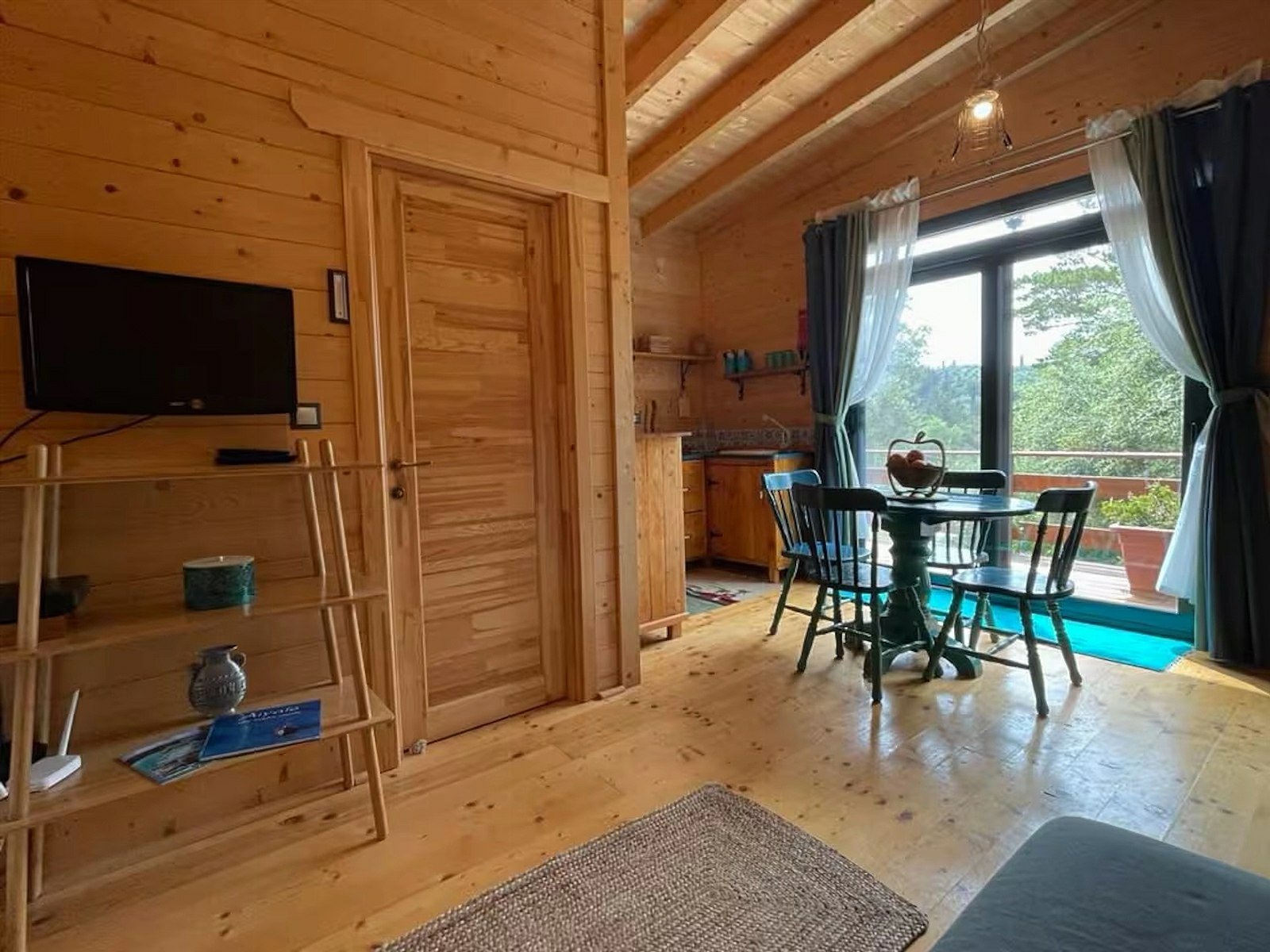
Your private, one-bedroom apartment within the lodge compound offers a profound sense of ownership and security. It is your annex, your sealed quiet chamber. Here, you control the rhythms. The kitchenette allows for the simple, nourishing meal that breaks the cycle of restaurant dining. The living area becomes a true living room, a space to read, to think, or to conduct a video call where the view behind you speaks of considered calm, not generic interiors. The bedroom is a dark, quiet fortress for sleep, uninterrupted by the footsteps of strangers in the hall.
This model recognizes that the line between “business” and “person” is artificial. The professional who is rested, who has slept deeply in silence, who has begun the day with sunlight and birdsong instead of fluorescent lights and a buffet clamor, operates from a different reserve. The ability to take a meaningful break—a true pause between calls or report-writing—by stepping into a private garden rearranges the mental geometry of a workday. It prevents the stifling feeling of being perpetually “on the clock” within a confined space.
Ultimately, this is an investment in the quality of your output. The hotel offers a standardized solution for the body. The lodge offers a personalized environment for the mind. It provides the quiet necessary for synthesis, the gentle stimulus of nature for creativity, and the physical space for the body to move and reset. You are not just booking accommodation; you are curating the conditions for effective thought. In choosing the lodge, you select not merely a place to sleep, but a container for the work you have come to do, allowing you to depart not just with tasks completed, but with a sense of clarity preserved and perhaps, even enhanced.