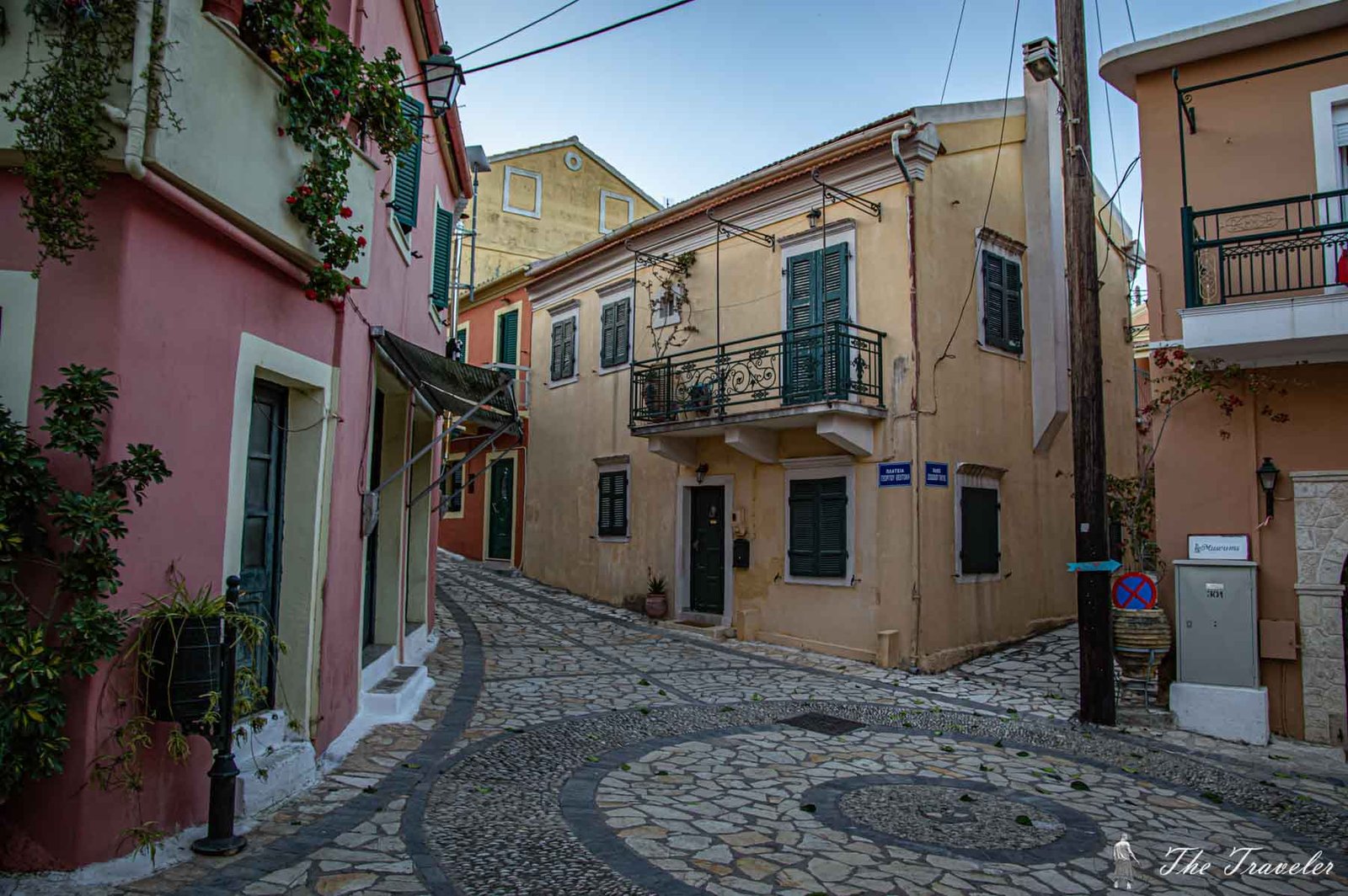
The Historic Village of Chlomos, Corfu Island, Greece
The history of Chlomos Village in Corfu Chlomos is one of the oldest villages of Corfu, with continuous habitation from antiquity and its current form taking shape as a medieval, Venetian‑era hilltop settlement in the 13th century. Origins and early habitation Archaeological indications show that the wider Chlomos area was inhabited before the birth of Christ, with remains scattered on the slopes of the mountain.
At the site of today’s church of the Holy Temple of the Most Venerable Brigadiers, researchers believe there was once an ancient altar dedicated to the god Apollo, suggesting a local cult in classical or Hellenistic times. Medieval formation of the village The present settlement was founded around the 13th century, making it one of the first organized villages on Corfu.
Its location at about 250–320 meters on the eastern side of Mount Morovigli gave it a strong defensive advantage and wide views over the sea, useful in the medieval period for spotting pirates and other threats.Venetian period and architecture From 1386 to 1797 Corfu was under Venetian rule, and Chlomos developed a distinctive Corfiot–Venetian character.
Most houses were built around a central square rather than along a main road, with narrow cobbled lanes, stone-built dwellings, and facades painted in warm colors—features that remain a hallmark of the village today. Name and local traditions One explanation for the name “Chlomos” links it to the Greek word for “pale,” referring to villagers who suffered from malaria in the early 19th century after moving up from the Korission lagoon area.
Another tradition connects the name to a plant called “Splonos,” used historically for fishing, while other theories relate it to similar toponyms elsewhere in Greece; none of these have been definitively proven. Notable historical figures and later history Of particular interest is a 15th‑century mansion in the village associated with Thomas Palaiologos, brother of the last Byzantine emperor Constantine XI Palaiologos, linking Chlomos symbolically to the final phase of Byzantium.
In later centuries, especially after Venetian rule, Chlomos relied on agriculture—primarily olives—but economic hardship in the 19th and 20th centuries led many residents to emigrate, contributing to a gradual decline in population. Modern identity Today Chlomos is often called the “Balcony of Corfu” because of its panoramic views over the east and west coasts and Lake Korission.
Despite some out‑migration and slow development, it retains much of its traditional layout and Venetian-style architecture, making it one of the best-preserved historic villages on the island.
To volunteer at the Corfu Donkey Sanctuary is to touch the living memory of the island, and to offer a simple, needed kindness. There is a silence now where there once was a familiar sound. For centuries, the soundtrack of Corfu’s rural life was not the cicada’s hum or the tourist’s chatter, but the steady, plodding rhythm of hoof on stone, and the soft, blowing breath of the donkey.
We use necessary cookies to make our site work. We’d like to set additional cookies to understand site usage, make site improvements and to remember your settings. Not consenting does not exclude you from accessing the website.
Functional Always active
The technical storage or access is strictly necessary for the legitimate purpose of enabling the use of a specific service explicitly requested by the subscriber or user, or for the sole purpose of carrying out the transmission of a communication over an electronic communications network.
Preferences
The technical storage or access is necessary for the legitimate purpose of storing preferences that are not requested by the subscriber or user.
Statistics
The technical storage or access that is used exclusively for statistical purposes.The technical storage or access that is used exclusively for anonymous statistical purposes. Without a subpoena, voluntary compliance on the part of your Internet Service Provider, or additional records from a third party, information stored or retrieved for this purpose alone cannot usually be used to identify you.
Marketing
The technical storage or access is required to create user profiles to send advertising, or to track the user on a website or across several websites for similar marketing purposes.